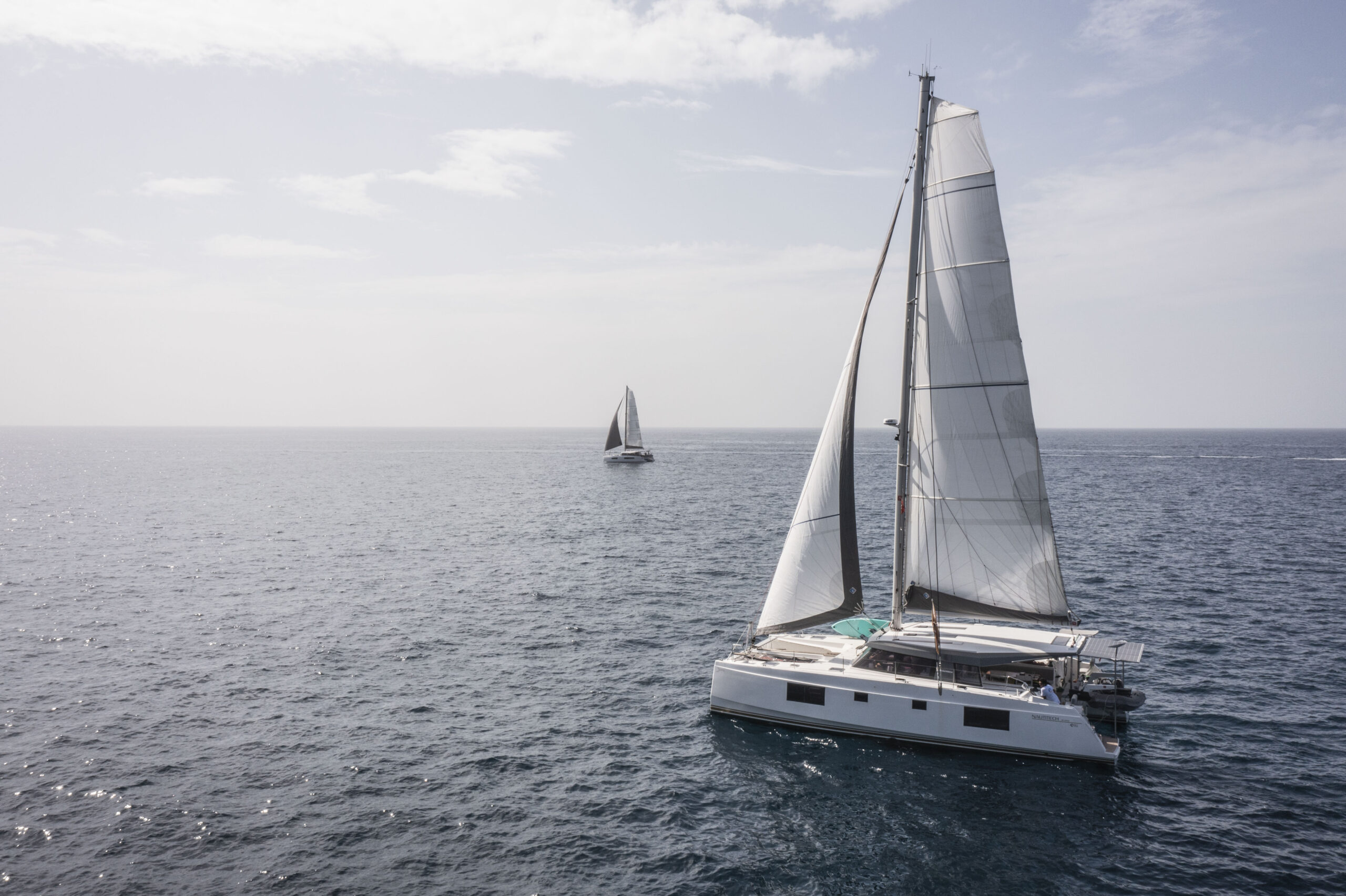
Marine Electronics : Which Equipment Should You Choose for Your Boat or Catamaran?
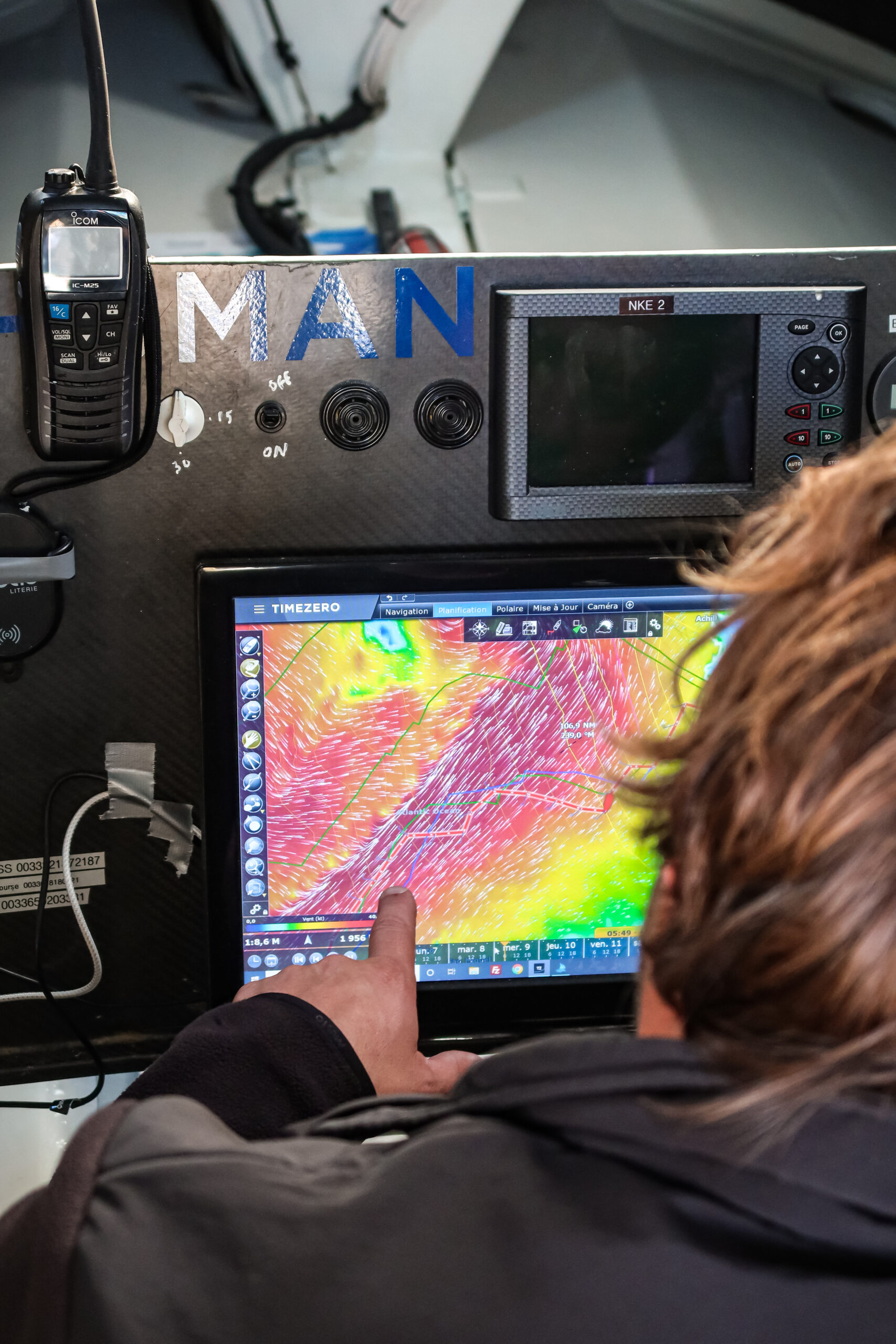
Marine GPS, chartplotters, autopilots, VHF radios, AIS, navigation instruments, NMEA 2000 networks… Marine electronics now play an essential role aboard sailing yachts, catamarans and motorboats. GPS systems, chartplotters, autopilots, VHF radios, AIS and navigation instruments provide valuable information to help sailors navigate accurately, communicate at sea and improve onboard safety.
Technology is evolving rapidly, and modern boats are increasingly equipped with sophisticated, connected electronic systems.
The 2026 Route du Rhum, which started on November 1, perfectly illustrates this evolution. During this 3,542-nautical-mile transatlantic race between Saint-Malo and Pointe-à-Pitre, sailors rely on advanced navigation instruments to analyse their surroundings, optimise their routes and manage their boats single-handedly.
However, these technologies are not reserved for racing yachts. GPS systems, monitoring instruments, communication equipment and onboard monitoring systems are also essential aboard cruising sailboats and catamarans.
Which electronic equipment should you install on your boat? How do you choose a marine GPS, a VHF antenna or an NMEA 2000 network? What should you consider to ensure a reliable installation?
Discover the main types of marine electronics and the solutions available at Shop & Sail.
The 2026 Route du Rhum: How New Technologies Are Transforming Navigation
The Route du Rhum is one of the world’s most prestigious transatlantic sailing races. Every four years, it brings together professional and amateur sailors who race across the Atlantic single-handedly.
The 2026 edition once again highlights technological developments in the marine industry. Boats competing in the Ultim, IMOCA, Ocean Fifty, Class40, Vintage Mono and Vintage Multi classes feature different levels of equipment and electronic configurations suited to their characteristics and sailing programmes.
Onboard instruments allow sailors to:
- Accurately monitor the boat’s position and course.
- Analyse wind speed and direction.
- Monitor boat performance and sail settings.
- Receive and use weather information.
- Communicate and transmit information remotely.
- Improve situational awareness and onboard safety.
Offshore racing is a real testing ground for marine innovation. Detection systems, connected instruments and data analysis tools are playing an increasingly important role in modern navigation.
These developments also inspire equipment designed for recreational sailing and long-distance cruising.
The objective remains the same for every sailor: having access to reliable information to make the right decisions at sea.
What Marine Electronics Should Every Boat Have ?
A marine electronics installation consists of several complementary devices. The right equipment depends on the type of boat, its intended use and the crew’s requirements.
1. Marine GPS and Chartplotters: Navigate with Precision
A marine GPS is one of the most important electronic devices onboard a boat.
Combined with a chartplotter, it allows you to view your position on a nautical chart, plan a route and monitor your progress while sailing.
Modern multifunction displays can also centralise information from different instruments, including depth, speed, wind, heading and engine data.
To equip your boat, explore our selection of marine electronics and navigation instruments at Shop & Sail.
Our range includes:
- GPS antennas for reliable satellite signal reception.
- Marine charts to plan your sailing routes.
- Multifunction chartplotters.
- Accessories and connectors for onboard installations.
For example, the Furuno GPA-017 GPS antenna provides reliable GPS signal reception. It is compatible with several Furuno devices, including the GP31, GP32, GP33 and GP7000.
2. Marine Autopilots: Improve Comfort While Sailing
An autopilot is particularly useful aboard cruising sailboats and catamarans.
It automatically maintains a heading or follows a programmed route, reducing the need for constant steering and making life onboard more comfortable, especially during long passages.
On a catamaran designed for extended cruising, an autopilot is an important piece of equipment for offshore passages and long-distance sailing.
However, its capacity must be properly matched to the boat’s displacement, configuration and intended sailing conditions.
The installation must also be compatible with the other electronic instruments onboard.
3. Navigation Instruments: Monitor Wind, Speed and Depth
Navigation instruments provide accurate information about the conditions in which your boat is sailing.
They help sailors adapt their course and optimise sail trim.
The main instruments include:
- Electronic wind transducer: measures wind speed and direction.
- Depth sounder: indicates the water depth beneath the boat.
- Speed sensor: measures the boat’s speed through the water.
- Electronic compass: provides heading information.
- Multifunction display: centralises data from different instruments.
There are also mechanical wind indicators, such as Windex masthead wind indicators, installed at the top of the mast. They allow sailors to quickly identify apparent wind direction and adjust their sails accordingly.
Discover our selection of Windex wind indicators and navigation accessories to equip your sailboat.
4. Marine VHF Radios and VHF Antennas: Stay Connected at Sea
A marine VHF radio is essential for communicating with other vessels, marinas and emergency services.
It allows sailors to make safety calls and communicate using designated marine VHF channels.
Choosing the right VHF antenna is also important to ensure reliable transmission and reception.
Antenna length, installation position, coaxial cable and connection quality all influence the performance of the system.
At Shop & Sail, explore our range of marine communication and safety equipment.
You can also find the Banten ECO 3 dB VHF antenna with 25 metres of cable, a solution designed for a range of sailing yachts, including medium-sized boats.
5. AIS and Safety Systems: Monitor Your Surroundings
AIS (Automatic Identification System) helps improve situational awareness and allows sailors to anticipate potentially dangerous situations.
However, it is important to remember that AIS is an aid to navigation. It does not necessarily detect every vessel or obstacle, particularly those without an active AIS system. It never replaces visual and auditory lookout or the international regulations for preventing collisions at sea.
Other devices can complement onboard safety systems:
- Emergency beacons.
- Compatible receivers and antennas.
- Monitoring cameras.
- Detection and tracking systems.
Explore our marine communication and safety equipment.
NMEA 2000 Networks: How to Connect Your Boat’s Electronic Equipment
Modern boats increasingly feature electronic instruments that can communicate with one another.
To facilitate this exchange of information, the NMEA 2000 network has become an important standard in marine electronics.
It allows compatible devices to be connected and share information across a single network.
For example, a GPS, multifunction display, depth sounder and sensors can transmit their data, making it accessible on several onboard instruments.
What Is an NMEA 2000 Network Used For?
An NMEA 2000 network can be used to:
- Centralise information from navigation instruments.
- Transmit speed and depth data.
- Share GPS position information.
- Allow different compatible devices to communicate.
- Make it easier to expand an existing electronic installation.
To build this network, several components are required, including cables, T-connectors, a power supply and terminating resistors.
At Shop & Sail, discover the Navico Micro-C NMEA 2000 backbone kit, designed to make it easier to create an onboard communication network.
You can also find our 3-metre Micro-C NMEA 2000 cable with stainless steel connectors, designed to connect different compatible electronic devices.
These accessories are particularly useful for catamaran and sailboat owners looking to upgrade their onboard electronics.
Always check compatibility between devices, communication protocols and network components before installation.
Marine Electronics and Power Management: Monitoring Your Boat’s Batteries
Onboard electronics require a reliable electrical power supply.
On a cruising catamaran or sailboat, electricity consumption can be significant. GPS systems, chartplotters, autopilots, VHF radios, navigation instruments, multimedia equipment and communication systems all rely on the available onboard power supply.
Monitoring your batteries is therefore essential to maintaining your boat’s energy autonomy.
A battery monitor can help you track:
- Battery voltage.
- Charging and discharging current.
- Temperature.
- Remaining autonomy.
- Overall battery bank status, depending on the equipment installed.
To monitor your electrical installation, discover the Scheiber 12V Battery Viewer, which centralises various battery and onboard electrical consumption readings.
It is compatible with first-generation Nautitech 40 Open and 46 Open models in their 12V configuration.
You can also explore our range of marine electrical equipment to complete your installation.
How to Choose the Right Marine Electronics for Your Boat or Catamaran
Choosing marine electronics should not be based solely on price or the number of features available.
Your installation needs to be suited to your boat, the equipment already onboard and your sailing programme.
Here are the main factors to consider.
Type of Boat
Electronic requirements can vary considerably between a monohull sailboat, a cruising catamaran and a motorboat.
The boat’s size, helm station configuration and existing equipment all influence the choice of instruments.
Sailing Programme
A boat used for coastal sailing will not necessarily have the same requirements as a catamaran designed for transatlantic crossings.
For offshore sailing, it is particularly important to have a reliable electronic installation, suitable communication equipment, sufficient electrical autonomy and appropriate safety systems.
Equipment Compatibility
Before purchasing a new instrument, it is essential to check that it is compatible with the equipment already installed onboard.
You should consider available connections, communication protocols, power supply voltages and technical specifications.
Power Consumption
Every electronic device consumes energy. It is therefore important to anticipate your installation’s power requirements and make sure your onboard power generation and battery storage are sufficient.
A well-designed electrical installation helps prevent unexpected problems during extended passages.
Shop & Sail: Your Specialist for Marine Electronics and Boat Spare Parts
Whether you need to replace a GPS antenna, add a navigation instrument, connect several devices through an NMEA 2000 network or monitor your catamaran’s batteries, every project requires the right components.
At Shop & Sail, we offer a selection of marine electronics, accessories and spare parts for sailboats, catamarans and motorboats.
Our online store features equipment from a wide range of marine brands, including Raymarine, B&G, Simrad, Furuno, Navico and many more.
Looking for a specific part for your Nautitech, Fountaine Pajot, Bali, Lagoon or another boat model?
Our team can help you find the right spare parts and equipment for your onboard installation.
Explore our complete range of marine electronics for boats and catamarans and discover all our marine spare parts and equipment.
Need a specific piece of equipment or looking for a part compatible with your boat?
Get in touch with our team:
- Email: contact@shopandsail.com
- WhatsApp: +33 7 68 91 82 07
We are here to help you find the right products and equipment for your boat.
FAQ: Frequently Asked Questions About Marine Electronics
What electronic equipment is essential on a boat ?
The essential equipment depends on the type of boat and its sailing programme. Typical equipment includes a GPS or chartplotter, a marine VHF radio, navigation instruments, a depth sounder and electrical monitoring devices. For offshore sailing, additional communication and safety equipment should also be considered.
What Is the Difference Between a Marine GPS and a Chartplotter ?
A GPS determines the boat’s geographical position using satellite signals. A chartplotter displays this position on a nautical chart and allows sailors to plan and follow a route.
What Is an NMEA 2000 Network Used For on a Boat ?
An NMEA 2000 network allows several compatible electronic devices to communicate with one another. It facilitates the sharing of navigation information, such as GPS position, depth, speed and certain engine data.
Which VHF Antenna Should You Choose for Your Sailboat ?
The right choice depends on several factors, including the boat’s size, antenna position, length, gain and compatibility with the VHF radio. Coaxial cable and connection quality should also be taken into consideration.
How Can You Monitor Your Boat’s Electrical Consumption ?
A battery monitor allows you to track electrical information such as voltage, charging and discharging current, and remaining battery autonomy. It helps you manage the available power more effectively, particularly during long-distance sailing.
Where Can You Buy Marine Electronics for Boats and Catamarans ?
Shop & Sail offers a selection of marine electronics, navigation instruments, GPS accessories, VHF antennas, connectors and spare parts for sailboats and catamarans. Our team can also help you find specific equipment references.
Shop & Sail, your partner for equipping, maintaining and upgrading your boat.